
Different Types of Penile Implants and Distinct Advantages of Each Type
 If you’re someone with erectile dysfunction disorder, you must have tried several treatment options, starting from medications to vacuum constriction device (penis pump) for correcting the problem. In case, the traditional treatment techniques have not served their purpose, do not lose hope-there is still light at the end of the tunnel. It would not be out of place to assume that you might have heard of penile implants as you have experimented with a range of remedial techniques.
There is sufficient clinical evidence to substantiate that penile implant has effectively worked for most men with ED for whom the conventional modes of therapy have failed to produce the desired results. Opting for prosthetic penile implant surgery is the last and only option for a significant proportion of males beset with ED.
The different types of penile implants
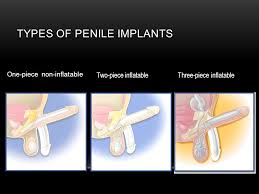 Talking about penile implant types, there are two distinct categories-inflatable implants and non-inflatable implants. Inflatable implants are again classified into two sub-categories; two-piece implants and three-piece implants. The non-inflatable devices, as their terminology indicates, are semi-rigid implants that cannot be inflated.
But this limitation (the fact that it cannot be inflated is an advantage, technically speaking) of the semi-rigid implant is more than made up by its flexibility. There are various kinds of non-inflatable implant devices as well, and the distinguishing feature of each type is the degree of malleability or pliability.
Inflatable implants
 Inflatable implants, both the two-piece and three-piece ones, are more popular (compared to their non-inflatable counterparts) throughout the world, including the US. The three-piece device has three distinct sections or parts whereas the two-piece has only two. When you choose a three-piece prosthetic implant for the surgery, the dual cylinders are inserted in the penis, the pump with a built-in release valve is installed in the scrotum, and a reservoir containing fluid is placed in the lower abdomen.
To facilitate an erection, you squeeze your scrotum mildly which activates the pump causing fluid to flow out of the reservoir and into the cylinders. You simply need to press the release valve for enabling the fluid to drain back into the reservoir which reverses the erection. The mechanism of two-piece devices is the same.
In a two-volume device, the pump is one section while the cylinders with the reservoir fixed at its back are the other.
Inflatable implants pros and cons
Three-piece devices
Pros:
– Has a natural feel to it and also appears lifelike
– Becomes soft and almost inconspicuous when deflated
– Erections are more firm compared to the two-piece implants
– The large size of the pump makes it easy to siphon
Cons:
– High risk of malfunction owing to the greater number of parts
Two-piece implant
Pros:
– The penis becomes soft and loose when deflated
– More easily concealed compared to a non-inflatable device
Cons:
– Erections not as firm as those with three-piece implants
– Individuals with arthritis, spondylitis, and other joint disorders may have to struggle with inflating the pump because of its small size
Non-inflatable or semi-rigid implants
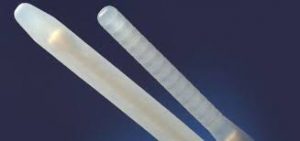 The non-inflatable or semi-rigid implant being a very simple device makes it easy to use. During the surgery, the device which comprises a semi-rigid or ductile tube is slotted inside your penis. When you wish to have sex, you push your penis upwards and push it down when you’re through.
Non-inflatable pros and cons
Pros:
– Easier to use because of the simple structure
– Suitable for those with joint problems
– Less expensive compared to inflatable implants
Cons:
– The penis will tend to stay firm and tumescent most of the time which could cause embarrassment
Concluding remarks
If you wish to know more about prosthetic penile implants, call us today at 212-541-6239 or email us.
References
- http://www.alarconurology.com/blog/erectile-dysfunction-penile-impotence/types-of-penile-implants/
- https://www.verywellhealth.com/what-are-the-different-types-of-penile-implants-4126585
- https://blog.drpaulo.com.br/en/blog/types-of-penile-prosthesis
- https://www.askdoctork.com/different-options-penile-implants-201404096260
- https://georgiaurologist.com/procedures/coloplast/is-a-penile-implant-right-for-you/
- https://onlinelibrary.wiley.com/doi/full/10.1111/j.1464-410X.2004.05025.x