
Category Archives: Doctor for Penile Implant NYC

Can a Urologist Perform A Penile Implant Surgery?

Urologists are an important part of the medical world. However, they cannot do everything. They identify problems with the genitals and their links to other diseases. But they are not professionals in everything related to their craft, and often have to depend on other practitioners to help them. This is especially true in the case of surgeries. So, for those of you wondering if your urologist can perform your surgery, the answer is yes, and no.

Choosing a Urologist

The basic job description of a urologist is to identify and often times cure ailments that affect the human genitals. They can treat man and woman. They are also qualified to perform more basic surgeries and operations on the genitals, like vasectomies, kidney stone removal, and urethrotomy. These are all relatively basic operations that they can perform on their own. But an implant is on another level.

An urologist “can” perform an implant, the same way you “can” fix the plumbing at your home. You may be able to do it, but with less finesse and you might even put other people in danger. And while a urologist might not be putting themselves in danger, they can put you in a lot of danger if the surgery is not successful.

Now, there are inherent risks of your urologist performing a penile implant unsuccessfully. However, it is not to say that there aren’t any benefits. When your urologist is performing a penile implant, they will be able to do the surgery within a week. The surgery will also relatively cost less, as it is the same person performing the checkup and surgery.

Choosing a Surgeon

There is nothing inherently wrong with getting a surgery from a urologist, but the risks of something going wrong increase tremendously. Not only does the risk of infection and device malfunction increase greatly, but the neural pathways and arteries in your penis can get damaged, leading to irreversible damage. And that’s where a surgeon comes in.

In the previously mentioned scenario of plumbing, surgeons are the plumbers that are better prepared and equipped to handle your plumbing problem. Surgeons have better training with implants, and more importantly, they have more experience with implants. And the more experience they have, the less likely it is that something will go wrong. It has less chance of infection, mechanical failure, and certainly of having irreversible damage when you choose an implant surgeon.

Of course, there are also certain downsides to getting a surgeon for your penile implant. Surgeons tend to be busy or may charge much higher than a regular urologist. They might even take a lot of time before they perform the surgery because of their busy schedules. But, for many, these problems are not really that big for as long as they are sure their surgery will be successful.

Conclusion

Of course, if your urologist has a degree or proper medical training to perform major surgeries, then there is no real problem with getting the surgery from a qualified urologist. That said, if you are looking for a checkup or a surgeon for you implant surgery, be sure to visit our website and learn more.
Am I Too Old For A Penile Implant?

Are you too old for A penile implant? Penile implants are, in more ways than one, a miracle of the modern technology. Relieving a conditions, which people considered incurable once, with minimal risk or side affects is no small feat. However, much like it is with other forms of treatment, people often associate age limitations with penile implants. It is true that penile implants are always a last resort for the people that have erectile dysfunction. But even people who are on that last stage contemplate greatly whether or not they should get it. So, if you find yourself in somewhat of a similar position, we are here to help. This guide will show you whether or not you can receive a penile implant, and how old you have to be.

Age for a Penile Implant

Age: 60

So, let’s get the most pressing matter out of the way first. Are you too old for a penile implant? Penile implants are a very common treatment method for all ages of men suffering from erectile dysfunction. One particular study saw that out of nearly 47 patients, 83% showed satisfaction with the result of the implants. And seeing how the average age for men in that test was 60, it is safe to say that you can get an implant till you are sixty.

While this may seem great, the real complications can start when you reach the age of 70 and above. At that point, you will have to consider a few additional factors.

Age: 70+

As soon as you reach your mid 70s, getting a penile implant comes with its own side effects and risks. If you are someone who is a rather healthy during or after their 70s, then by all means you can go ahead with the penile implant procedure. However, if you are someone who has some other ailment, then it is safe to consider not getting a penile implant; especially if you have a heart condition.

If you are suffering from a high or low blood pressure, or some other cardiac issue, you will first have to meet your cardiologist and get their professional opinion. Anesthesia can have a very serious affect on your body and can have serious complications such as a heart attack, stroke, or even death. You must also consider that the surgery itself can also lead to an infection, damage to the urethra, and failure of device.

Not Healthy Enough For A Penile Implant

Now in the case that you are not healthy enough for a penile implant, there are always other treatment plans that you can opt for when getting rid of erectile dysfunction. Although it is possible that you may have already tried many treatment plans, there are still some that you can try. Things like changing your diet and changing your medication can also have an effect on your erectile dysfunction.       You can also try getting specific massages from an experienced practitioner to help with your impotence. A few studies suggest getting a specific massage can help alleviate ED.

Conclusion

It is important that you discuss your options with a urologist before reaching a conclusion on your own. Only the right professional can guide you better on what can or cannot work for you. If you are looking to get a penile implant that is sure to go the distance, visit our website to find out more about our amazing urologists and the treatments that we offer.

Do Penile Implant Surgeons Require Special Training?

Do Penile Implant Surgeons Require Special Training? Over the last two decades technological advancements have completely revolutionized urological practices. Moving from an invasive open surgery model to minimal invasion and cuts, Urological practices have come a long way. However, since urologists are working on very sensitive parts of the body, it raises the question, “Is technology overshadowing the raw skill of urologists?”  In other words, do male implant surgeons require special training to stay up-to-date with this current age of technology?

Becoming a Urologist

To answer your question, yes, implant surgeons do require specialized training to help them deal with the complicated nature of their job. Being a urologist is an incredibly hard job, not only because they have to deal with incredibly sensitive parts of the body, but also because they have to learn crucial information from a variety of medical professions.

Urologists also have an extremely rigorous training procedure and education throughout the years they spend in the med school.

Education Requirements

Urologists alone, have to go through about four years of med school. After that, they have to go through another four or five years of training at a hospital. This training prepares them for surgeries that they have to perform throughout their professional lives. For many urologists, this is where their education stops. However, some go the extra mile with fellowships that help them sharpen their surgical skills.

These fellowships also help them specialize in a very specific area of their craft, like female urology or urological oncology. It is very common for urologists to go that extra mile, as it gives them more insight of their area of expertise, and helps them become better surgeons. After going through almost ten years of studies, they have to pass the specialty certification exam for urologists.

Now, this is only the educational side of their careers. In addition to theoretical studies, they have to spend quite a few years in training. They have to receive extensive training in surgical procedures.

Sensitivity of the work

The human genitals are incredibly sensitive parts of the body, and one mistake can result in major irreversible damages. So, it is imperative for the surgeons and urologists alike to be well-versed and capable of doing surgeries like vasectomies or penile implants. And in clinics and hospitals, where urologists don’t have the skills to perform more advanced surgery, the institution will take help from outsourced resources.

Med schools understand the importance of urology and hence prepare their physicians for every challenge they may encounter. Med schools test the limits of their students through rigorous testing and simulations, all of which have very low margin for error.

Conclusion

Implant surgeons are possibly the most important individuals in urology. They have to be great at breaking the ice and socializing because of the nature of the issues they deal with. People are not very open about urological issues, especially when it comes to penile implants. It is the implant surgeon who has to make them feel comfortable before suggesting a surgery.

With very low margin for error, you wouldn’t want to take a risk with a surgeon who does not have the experience or skill to deal with your situation. So, be sure to visit our website in order to find out more about our implant surgeons and various other treatments.

FIFTH AVENUE UROLOGY
4 East 76th Street
New York, NY 10021
——–
212-541-6239

Indications for Penile Implants

How many men are suffering from Erectile Dysfunction (ED)?

According to the National Institute of Health, there are 30 million American men that are affected with Erectile Dysfunction (ED). Most men who suffer from ED are over the age of 40. However, the prevalence of ED increases with age. Chances are, you or someone you know is suffering from ED right now.

What is Erectile Dysfunction (ED)?

ED (also called impotence) occurs when a man has difficulty achieving or maintaining an erection. There are many causes of ED. Some of the most common reasons include heart disease, vascular disease, diabetes, alcohol, drugs, surgical complications and Peyronie’s disease. Chronic heart and vascular disease, along with diabetes can severely impair the blood vessels of the patient, restricting blood flow to the penis. This can result in an inadequate erection. Alcohol, tobacco and drug use (even prescription drugs) can also limit blood flow to the penis, leading to ED.

What is Peyronie’s Disease?

Finally, Peyronie’s disease occurs when a man has developed scar tissue in his penis, preventing him from achieving or maintaining an erection. At this time, causes for Peyronie’s disease are not known although most researchers believe that it occurs due to repeated trauma to the penis. This can happen via sexual activity, sports or an accident. Besides having ED, other symptoms of Peyronie’s disease include a significant bend to the penis, shortening of the penis, and pain even without having an erection.

What are the treatments for Erectile Dysfunction?

There are currently only three treatments for ED: prescription medications, use of a penis pump, and penile implants. Most patients that are newly diagnosed with ED are prescribed medications by their doctors.

Oral medications for Erectile Dysfunction

The most commonly prescribed drug is Sildenafil, or more commonly known as Viagra. This medication works by enhancing nitric oxide, which is a naturally occurring chemical in the human body. What nitric oxide does is it relaxes the muscle tissue to allow increased blood flow to the penis, resulting in an erection. However, there are a couple of downsides to this medication. First, it does not provide an immediate effect. It takes an average of 10-20 minutes after taking the drug to achieve a full erection. Second, since Sildenafil only amplifies the effects of nitric oxide in the body, the patient must first be sexually stimulated before the full effects of the medication could be realized.

Penis Pumps

Penis pumps, on the other hand, works mechanically. A vacuum tube is placed on the penis. The vacuum pulls the blood into the penis, and a ring is set on the base of the penis to make the erection last. The downside to the penis pump is it does not allow for spontaneous sexual activity, and it can take between 5-10 minutes to get the penis erect entirely. The pump can also cause bruising on the penis. Finally, the band at the base of the penis can affect ejaculation.

Indications for Penile Implant Surgery

Most men can be successfully treated with either medication or through the use of a penis pump. But for men who are either unsatisfied with these treatment options or for whom these treatment options have failed, there is one last available treatment for them: penile implants. A penile implant is a medical device that is surgically-inserted inside of a man’s penis to allow him to achieve an erection.  This treatment option may be the most invasive, but most men who have had the procedure done reports that it is the most satisfying option for them. According to the Mayo Clinic, these devices last up to 10 years without the need for replacements 60-80% of the time.

If you or someone you know has Erectile Dysfunction and has tried other treatments and failed, contact us today at 212-541-6239 and schedule your free appointment. To find out more about penile implants, visit our website at FifthAvenueUrology.com.

———

References

  1. Nunes KP, Labazi H, Webb RC. New insights into hypertension-associated erectile dysfunction. Current Opinion in Nephrology and Hypertension. 2012;21(2):163–170.
  2. Mayo Clinic. Penile Implants. https://www.mayoclinic.org/tests-procedures/penile-implants/about/pac-20384916?p=1

How do penile implants work?

What is Erectile Dysfunction (ED)?

Penile Implants are used to treat Erectile Dysfunction (ED). They provide physical support to the penis so that the patient can achieve an erection. Broadly speaking, there are two types of penile implants available in the market today: semi-rigid (malleable) and inflatable implants.

Semi-rigid (Malleable) Penile Implants

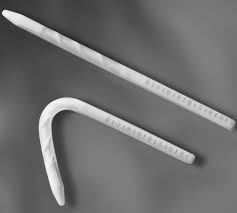
semi-rigid-penile-implant-technical-medical-information-02Semi-rigid implants are by far the cheapest and simplest to use. They are composed of two flexible, silicone rods that are surgically placed into the erectile tissue of the penis. Whenever the patient is ready for sexual activity, all he has to do is bend his penis upward. When he is done, he can turn the penis downward for concealment.

            Pros of using the semi-rigid (malleable) penile implant

As with any medical device, there are pros and cons to the semi-rigid implant. The prosthesis provides a constant state of erection for the penis; therefore it is effortless to use primarily for men who have problems with manual dexterity. This also allows for spontaneous sexual activity because the patient does not need to wait for the device to be primed before using.

            Cons of using the semi-rigid (malleable) penile implant

However, due to its constant rigid state, this implant can promote the highest rate of penile tissue erosion as compared to the other implants. If the patient has other chronic diseases that affect the vascular system, such as diabetes, the semi-rigid implant could worsen the health of the penile tissue. The device also doesn’t offer any expansion or lengthening of the penis.

3-piece and 2-piece Inflatable Penile Implants

inflatable-penile-implants-info-nyc-01Inflatable implants are slightly more complicated to use than the semi-rigid implants. However, what they lack in simplicity they more than makeup for in functionality. As the name suggests, inflatable implants provide the patient with an erection when they are inflated. There are two types of inflatable implants: the three-piece and the two-piece inflatable devices.

            How does the 3-piece inflatable penile implant work?

The three-piece is composed of two cylinders that are surgically placed in the penis. These cylinders are then attached to a tube that is connected to the reservoir, which is situated in the lower abdomen. The reservoir contains saline which is delivered to the cylinders by a pump, which is placed in the scrotal sac. When the patient is ready for sexual activity, he presses the pump, which then delivers the saline from the reservoir into the cylinders resulting in inflation of the penis causing an erection. When the patient is finished, he presses the deflator valve located at the bottom of the pump, which then delivers the saline back into the reservoir causing the penis to deflate and return to its normal, flaccid state.

            How does the 2-piece inflatable penile implant work?

The two-piece inflatable implant works in much the same way as the three-piece except that the reservoir and the pump are combined into one unit. This reservoir-pump combo is placed inside the scrotum; therefore there are no parts placed within the lower abdomen, and the surgery is less complicated as compared to the three-piece implant. However, a significant disadvantage of the two-piece implant is that the reservoir is smaller, so there may not be enough saline to produce a full erection.

Inflatable penile implants vs. Semi-rigid (malleable) penile implant

By far the most significant advantage of using the inflatable devices instead of the semi-rigid implant is the ability to return to a flaccid state after sexual activity. With the simple push of the deflator valve, the patient can deflate his penis, which produces a much more natural feel and look as compared to the semi-rigid implant which prevents a return to a flaccid state.

If you would like to know more about how penile implants can benefit you and your partner, contact us today at 212-541-6239 and schedule your free appointment.

To find out more about penile implants, visit our website at: www.FifthAvenueUrology.com/penile-implants/

Top Benefits of Penile Implants

What is Erectile Dysfunction (ED)

To be diagnosed with Erectile Dysfunction (ED) is a massive set back for many men and their partners. Naturally, men will do anything to receive treatment for ED. When men are first diagnosed with ED, physicians start off by prescribing the least invasive treatment. If the first treatment does not work or the patient cannot or will not tolerate the side effects, the physician prescribes a different treatment.

Pros of oral medications

The least invasive treatments prescribed is the use of oral medications. One of the most well-known of these medications is Viagra. Viagra works by enhancing nitric oxide. This naturally-occurring chemical relaxes the muscle tissue to allow increased blood flow to the penis, resulting in an erection. It is easy and convenient to use.

Cons of oral medications

However, there are drawbacks to using the oral medications. First, it takes at least 10-20 minutes for the drug to take effect entirely, and some men may find that the wait times do not allow for spontaneous sexual activity.  Another, more severe side effect is that Viagra can induce low blood pressure and is contraindicated for men who have heart disease or heart failure.

Penile Implant is superior to medications and pumps

The Penile Implant solves these problems. The prosthesis takes no time at all to use. When the patient is ready for sexual activity, he does not need to remember to take medication and wait 30 minutes for the medicine to take full effect. He and his partner can participate in sexual activity spontaneously. Since the implant works by providing physical support for the penis, this device is safe to be used by patients with heart disease and heart failure without risk of hypotension.

Indications for Penis Pump

However, if the patient is unwilling or unable to use oral medications, they can use a device called a penis pump. The pump induces an erection by creating a vacuum, pulling blood flow towards the penis which causes it to swell and become erect. The patient can then place a ring on the base of his penis to keep his erection for sexual activity. The problem with this approach is that the vacuum causes bruising to form on the penis. The ring placed on the base of the penis also hampers the force of the man’s ejaculation, since the ring constricts the ejaculatory pathway from the scrotum to the penis.

Penile Injections and Suppositories

Finally, there are penile injections and suppositories that are used to treat ED. These work by helping to increase blood flow to the penis, thereby inducing an erection. However, both treatments are cumbersome and are more painful to use as compared to the oral medications and the penile pump. Both methods work relatively quickly (about 5-20 minutes) but still require wait times before the patient can participate in sexual activity.

Penile Implant is superior to medications and pumps

On the other hand, there are no painful suppository insertions or injections needed when the man has a penile prosthesis. Although surgery is indicated to insert the device, it is a one-time intervention only. Recovery time is minimal, requiring only 4-6 weeks of healing time before the patient can participate in sexual activity again post-surgery. After the surgery, the patient can have a full erection and to have sexual intercourse whenever and wherever he and his partner desires.

If you would like to know more about how penile implants can benefit you and your partner, contact us today at 212-541-6239 and schedule your free appointment.

To find out more about penile implants, visit our website at www.fifthavenueurology.com/penile-implants/

How Penile Implants Work

Have you been asking yourself lately how penile implants work? A penile implant is a way to go if you’ve not been able to resolve your erectile dysfunction with the traditional treatment modes. Penile prostheses which are either semi-rigid or inflatable are installed within the scrotum and penis through a surgical procedure. Your doctor or surgeon will suggest a suitable penile prosthesis for you (inflatable or non-inflatable) after reviewing your medical history, the underlying cause of ED, and conducting a thorough physical examination.

You’d be an ideal candidate for a semi-rigid or articulated (non-inflatable) implant if your manual dexterity is limited (caused by a joint disorder or spinal cord injury). However, inflatable two-piece and three-piece prostheses are more popular than the non-inflatable types because of their handiness and effectiveness.

Aspects your doctor will consider before suggesting an appropriate implant

Apart from your personal preference, your doctor will consider several other factors before recommending a suitable penile prosthesis. These factors, amongst other things, include:-

  • Your partner’s and your ages
  • Your physique (height and weight)
  • Previous pelvic or abdominal surgeries (if any)
  • Dimensions of penis, glans penis (the tip or head of the penis), and scrotum
  • Kidney transplant surgery if any
  • Whether a penis is circumcised or not
  • History of colostomy
  • Life expectancy
  • Overall wellbeing

Mechanism of how penile implants work

The inflatable penile implant, both the 3-piece and the 2-piece devices, have similar structures and operation mechanism. The components of a three-piece implant comprise dual cylinders, a pump with release valve, and a reservoir filled with fluid. These components are separate in the three-volume prosthesis while in a two-piece device-the pump and reservoir constitute one section and the dual cylinders or tubes make up the 2nd component.

To achieve an erection, you’ll need to blow up or expand the implant. This you do by squeezing the pump positioned inside your scrotal sac. The mechanical action of the pump pushes the saline fluid out of the reservoir. The fluid drains into the cylinders (installed inside the penis) causing them to inflate, eventually giving you an erection that is strong and taut enough for satisfactory coitus.

When it comes to using the semi-rigid or articulated penile implant, you simply need to lift your penis to align it with your partner’s vulva for thrusting it inside the vagina.

Sex life post surgery

Most men have reported that on inflating the implant, they achieve an erection that is more or less identical to a normal erection, regarding firmness and girth. However, these men have also mentioned that the length of the penis when fully erect is somewhat shorter compared to a usual erection. The prosthesis does not in any way impede the capability to attain orgasm or adversely affect sensations felt on the penis’s skin.

Unfortunately, implantation of the prosthesis damages the natural reflex that triggers an erection. In other words, you may not be able to experience an erection if you do not inflate the device. On the other hand, you may never be able to have a normal erection if the prosthesis is taken out.

Concluding remarks

You can talk to our prosthetic specialist or urologist for a better understanding of the modus operandi of the different penile implants.

References

  1. https://www.medicalnewstoday.com/articles/320918.php
  2. https://prostate.net/articles/do-penile-implants-work
  3. https://www.webmd.com/erectile-dysfunction/guide/penile-prosthesis#1
  4. https://malecare.org/penile-implants-the-options-the-pros-and-the-cons-of-the-different-designs/


An Introduction to Penile Implant Surgery NYC

An Introduction to Penile Implants

Penile implants are the subject of many discussions online, and for many reasons. Many people like the appeal of being able to improve the esthetic and size of their penis. But in many cases, the information floating around can be misleading. In this article, we’re going to give you the low down on penile implants so that you know what to expect.

Who Are Penile Implants for?

First, let’s address what penile implants are really for. While many people think penile implants are purely esthetic, the truth is they should be used as a solution for a medical condition. And while they may have some benefits performance wise, their primary goal is not to make your penis bigger. As a matter of fact, the size difference will be minor in most cases.

What Are They Actually?

Penile implants consist of materials that are placed inside the penis to maintain and trigger an erection. While they are commonly used by patients suffering from erectile dysfunction, they can also be used for other disorders as well. One example is Peyronie’s disease, which is a condition that can be characterized by a painful and bent penis. All penile implants require surgery and a subsequent recovery process.

What Are the Different Types of Implants Available?

There are many types of penile implants on the market, all with their own specificities. Inflatable penile implants are some of the most common on the market. Two inflatable cylinders are placed inside the penis and a reservoir is implanted in the scrotum. In some cases, a larger reservoir will be inserted in the abdomen. Inflatable implants allow you to have full control over your erection through a pump that is located in the scrotum and the risk of internal damage is much lower since inflations aren’t constant.

Then you have semi-rigid rod penile implants. These are lower in cost in general, which makes them a better option for many people. Instead of using inflation, semi-rigid implants rely on stiff material that will be permanently lodged inside the penis. While these rods can be bent, the penis itself will always remain firm. However, the chance of internal damage is greater since there will be constant pressure from the rods inside your penis.

Penile implants can be a godsend if you’re suffering from erectile dysfunction. They can help gain back control of your sex life and will help you regain some of your confidence. If you feel like this could be the solution for you, contact us today to schedule an appointment with the best penile implant doctor in NYC.

Top Penile Implant Surgeon Discusses Erectile Dysfunction

4 Signs That You May be Dealing with Erectile Dysfunction

While over 40% of men will have to deal with erectile dysfunction at some point in their lives, a lot is still unknown about the condition. While in some cases erectile dysfunction is only occasional, in others, ED can be linked to something more severe and will require some treatment. Here are some tell-tale signs that you may be dealing with an erectile dysfunction problem.

You Cannot Have Sex with a Partner

erectile-dysfunction-specialist-no-sex-partner-nyc-01Some men will report that they have no problem getting an erection when they’re alone but will be unable to achieve one when having sex with their partner. Or in some cases, they’ll be able to get an erection, but it won’t be firm enough for intercourse. That’s a clear sign of erectile dysfunction and might be related to stress or other psychological issues. If you fail to get an erection with your partner over 50% of the time, then it’s definitely a sign that you may have a problem.

Night Time Erection

nighttime-erection-ed-symptom-02

Another sign that you may be dealing with psychologically related ED is if you’re experiencing lots of erections during your sleep but not with your partner. If you want to test if that’s the case, one easy way to do so is by using what is called the “postage stamp test”. All you have to do is take a ring of stamps and attach it to the base of your penis before going to sleep. If the roll is broken when you wake up in the morning, this might be a sign of nocturnal activity.

Poor Oral Health

A lot of people are unaware of the impact poor dental hygiene can have on the whole body, including erections. A Taiwanese study recently found that men who were suffering from chronic periodontal disease were also 79% more likely to show signs of erectile dysfunction. Researchers suggested that it may be because bad oral hygiene increased the number of bacteria in the mouth which then enters the bloodstream, hindering blood flow and erections.

Dependence on Viagra

viagra-dependance-ed-doctor-urologist-03While Viagra was originally intended for people suffering from erectile dysfunction only, a lot of people started abusing the drug to enhance their sexual performance. The problem is that abuse of Viagra by healthy people can eventually lead to dependence and erectile difficulties. It can also increase the risk of developing mentally related erectile dysfunction.

If you happen to exhibit any of these symptoms, then it is strongly recommended that you seek professional assistance immediately. If you’re struggling with erectile dysfunction and are looking for help, contact us today to schedule an appointment with the best penile implant doctor in NYC.

Schedule an Appointment: 212-541-6239